







SO KAUFEN SIE DIE GEMÄLDE
Die beiden weißen Felder oben sind das Kaufformular. Füllen Sie die Codes der Bilder im ersten Feld aus. Schreiben Sie dann Ihre E-Mail in das zweite Feld und klicken Sie auf "POST". Wir werden uns bei Ihnen melden. Wo finde ich die Codes? Siehe unten.

BEISPIEL: WO SIE DEN CODE FINDEN (10819)

LIEFERUNG AUF RAHMEN

LIEFERUNG AUF LEINWAND

WERTVOLL

POST MORTEM

ZERTIFIZIERT

MIT TRACKING GESENDET

KEINE VERFOLGUNG/p>
DIE KUNST
DIE GEMÄLDE
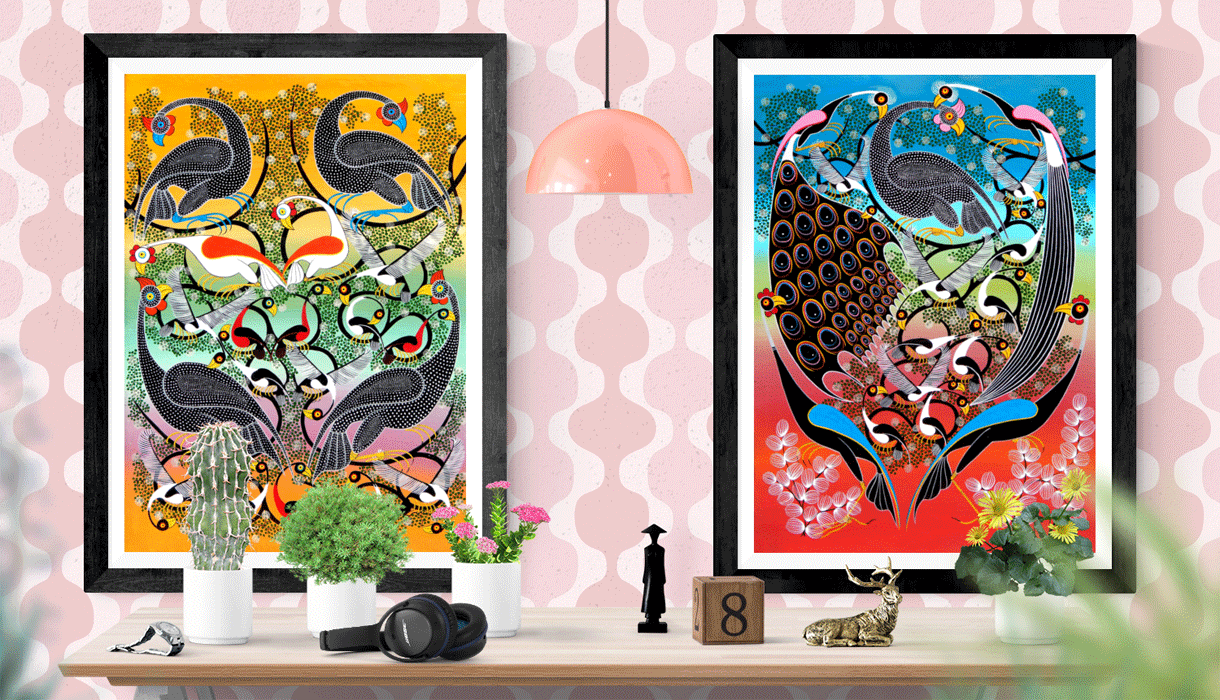
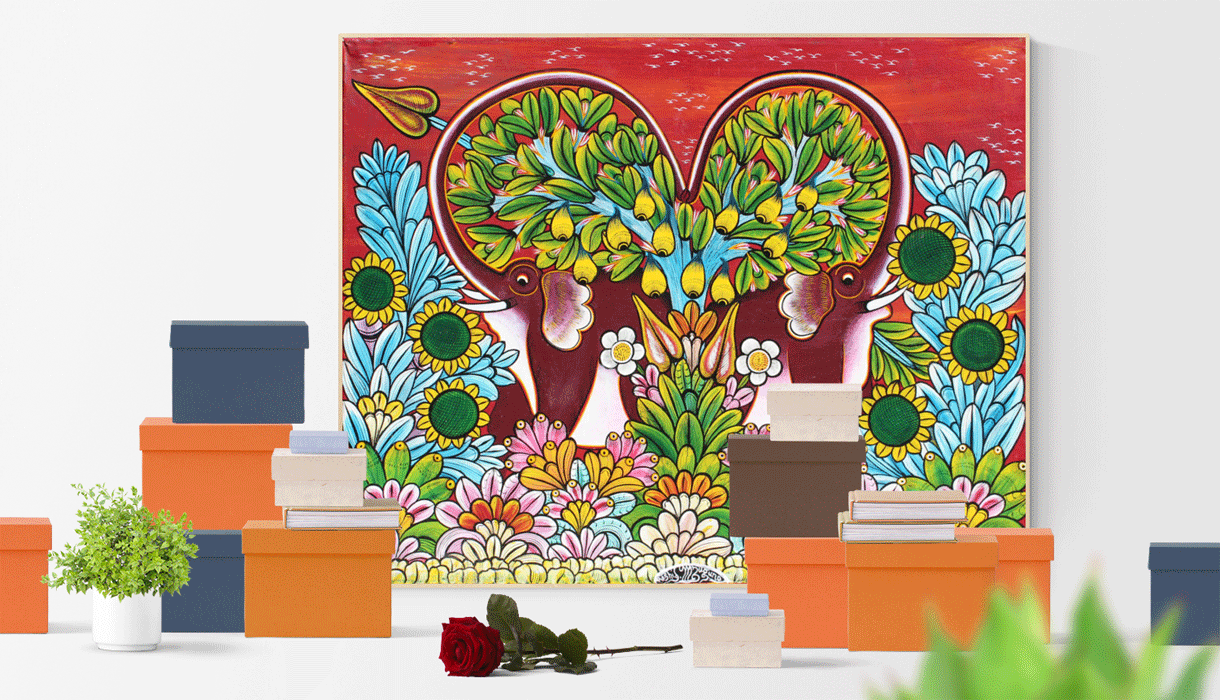
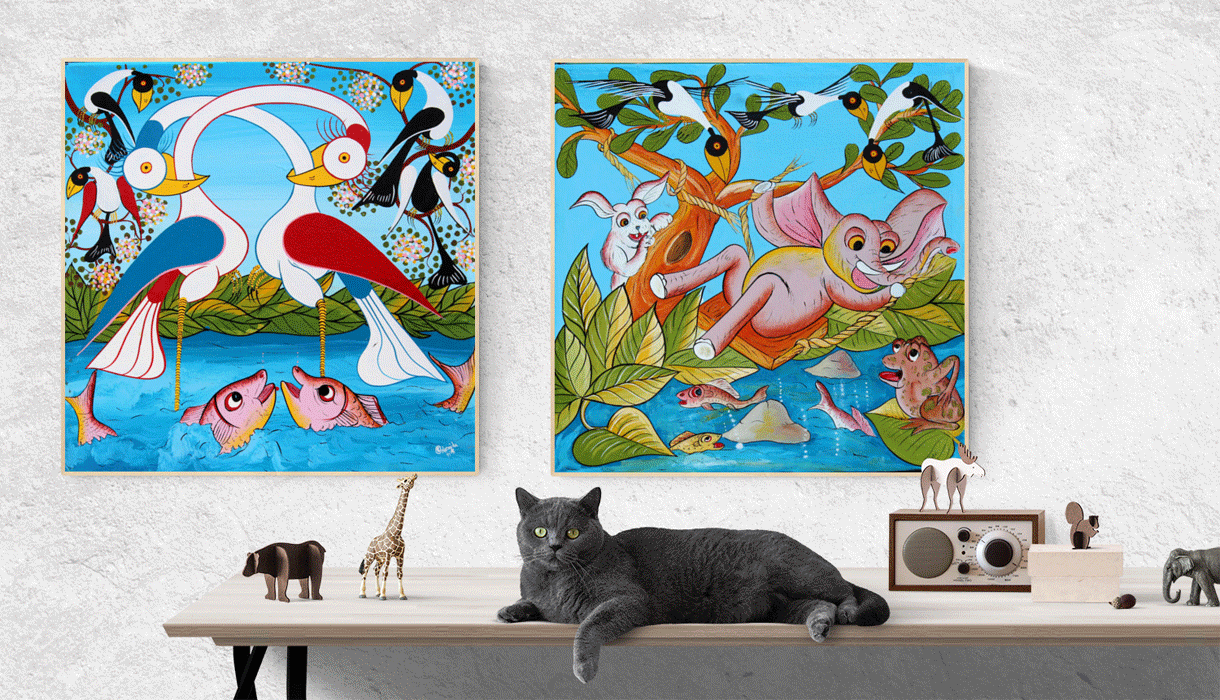
Alle diese farbenfrohen Gemälde stammen aus Ostafrika. Sie gehören zu einem Kunststil, der Tinga Tinga heißt. Es wurde 1968 von Eduardo Saidi Tinga Tinga gestartet. Leider wurde er 1972 getötet, aber sein Erbe besteht bis heute fort. WWenn Sie mehr über die Tinga Tinga-Kunst erfahren möchten, besuchen Sie bitte www.afrum.com. Die Website ist nur in Englisch.
DIE ARTISTEN
Diese Website präsentiert Ihnen Gemälde von etwa 100 besten Künstlern. Sie kommen aus Tansania, das für den höchsten afrikanischen Berg Kilimandscharo und die würzige Insel Sansibar bekannt ist. Weiterlesen....
DIE AUSSTELLUNGEN
Die Tinga Tinga-Gemälde befinden sich in vielen Museen und Sammlungen. Hunderte von Ausstellungen wurden auf der ganzen Welt organisiert. Die Gemälde sind in Deutschland, der Schweiz und insbesondere in Japan am beliebtesten. Es gibt ungefähr 20 Maler in Japan pro Jahr.
DIE BIBLIOGRAPHIE
Viele Bücher wurden über die Tinga Tinga Kunst geschrieben. Die Bilder sind auch in Märchenbüchern und Fernsehfilmen sehr beliebt. Und natürlich wurden auch unzählige Kataloge gedruckt. Weiterlesen....
DIE INFO
DER ESHOP
Der Tinga Tinga Studio Eshop ist einer der ältesten Eshops der Welt, der sich mit afrikanischer Kunst befasst. Es ist seit mehr als 10 Jahren hier und bedient Tausende glücklicher Käufer. Einige der Kunden waren berühmte Schauspieler, Politiker und Sportler. Die Bilder erreichten sogar den ehemaligen Präsidenten der USA, Deutschlands und der königlichen japanischen Familie.
DER GRÜNDER
Der Eshop wurde von Daniel Augusta gegründet, der seit 2005 mit den Künstlern in Tansania zusammenarbeitet. Von 2010 bis 2014 war er Manager der Tinga Tinga Artist Cooperative. Zwischen 2015 und 2016 hat er die tansanische Agentur Tanart wiederbelebt, die afrikanische Kunst in alle Welt verschifft die Welt. Jetzt zog er zurück nach Europa, wo er unter Afrum Kunstdienstleistungen anbietet.
DAS TEAM
Derzeit werden die Verkäufe von zwei tschechischen Experten für afrikanische Kunst, Vaclav Dusek und Jiri Rosa, abgewickelt, während Daniel Augusta durch Europa reist, um die Gemälde auf verschiedenen Ausstellungen zu präsentieren. Wir erwarten, dass unser Team bald von regionalen europäischen Kunstberatern von Tinga Tinga unterstützt wird.
AUSSTELLUNGEN
Das Tinga Tinga Studio beherbergt die größte Sammlung von Tinga Tinga-Kunst in Europa. Wir arbeiten mit privaten und öffentlichen Galerien, Museen und anderen europäischen Institutionen zusammen, um Tinga Tinga-Ausstellungen zu organisieren.
WARUM TINGA TINGA KAUFEN?
EINZIGARTIG SEIN
Alle Tinga Tinga Gemälde sind handgemalt. Heute wird alles in Massenproduktion hergestellt. Eine Originalkunst zu besitzen ist eine gute Erfahrung. Es bringt Balance in Ihr Leben.
SEI ANDERS!
Kannst du nicht das nächste Geschenk für deine Familienmitglieder, Kinder, Freunde, Freundinnen oder Eltern herausfinden? Dann überlegen Sie sich ein Tinga Tinga Gemälde zu kaufen! Es kann niemals falsch sein! Malen ist nicht nur eine gewöhnliche Sache. Es ist auch ein Gefühl, eine Botschaft und vieles mehr.
INVESTITION
Die Bilder werden immer noch stark unterschätzt. Daher wird der Preis für die Tinga Tinga-Kunst eher steigen als fallen. Ehrlich gesagt - wo kann man ein Originalkunstwerk für ein paar hundert Dollar bekommen? Erst kürzlich wurde ein Tinga Tinga-Gemälde für 51.000 US-Dollar versteigert, sodass Sie absolut nichts zu verlieren haben.
DAS GESCHÄFT ODER DIE CHARITÄT?
Ich kenne Leute, die Tausende von Dollar für afrikanische Wohltätigkeitsorganisationen ausgeben. Tatsächlich ist "Verschenken" jedoch nicht die gute Strategie. Die Menschen wollen stolz und unabhängig sein. Wenn Sie ein Gemälde aus Afrika kaufen, werden Sie mehr für die Armen tun, als nur Ihr Geld zu verschenken. Sie werden ihnen den Zweck geben. Sie geben ihnen eine Mahlzeit und das Geld für Kindergebühren.
THERAPIE
Die Tinga Tinga Gemälde sind voller Energie. Viele Leute sagten mir, dass sie sich glücklich fühlen, wenn sie ein Tinga Tinga-Gemälde sehen. Und sicher - es gibt eine Wissenschaft namens Kunsttherapie. Tinga Tinga hilft definitiv deiner Seele.
DEKORIEREN SIE ZU HAUSE!
Gehen Sie zum nächsten Einrichtungsgeschäft und vergleichen Sie die Preise der Poster mit den Preisen der originalen Tinga Tinga-Gemälde. Die Preise sind für die Künstler unglücklich, aber gut für Sie. Mitole ist ein berühmter Künstler und seine Gemälde befinden sich im British Museum. Und so ist es auch mit Mr.Charinda. Seine Bilder werden in der Nationalgalerie in Florenz ausgestellt. Jetzt können Sie sie auch an Ihren Wänden haben!
STARTEN SIE EINE SAMMLUNG!
Die Tinga Tinga Gemälde sind fantastische Gegenstände zum Sammeln. Starten Sie jetzt eine Tinga Tinga-Sammlung und Sie werden viele andere Leute treffen, die das Gleiche tun. Bauen Sie Ihre Sammlung auf. Alle Themen sind in Tinga Tinga art verfügbar.
VERKAUF
LIEFERUNG
Nachdem Sie uns mitgeteilt haben, welche Bilder Sie kaufen möchten, bitten wir Sie, uns Ihre Lieferadresse mitzuteilen, indem Sie DAS ADRESSFORMULAR ausfüllen. Wir verwenden zwei verschiedene Firmen, um die Bilder zu versenden. Wir versenden billige Bilder mit tschechischer Post. Sie können das Paket nicht verfolgen. Die teuren Bilder werden mit EMS verschickt. EMS ist ein zuverlässiges internationales Unternehmen, das die digitale Verfolgung der Pakete verwendet. Die Lieferung dauert ca. 5 Tage.
ZAHLUNG
Zahlen Sie erst, nachdem Sie die Bestätigungs-E-Mail erhalten haben. Sie können mit allen gängigen Kreditkarten - VISA, MasterCard und American Express - auf der ZAHLUNGSSEITE bezahlen. Der Service wird von PayPal bereitgestellt. Sie können auch mit PayPal bezahlen.
SENDEN SIE NACHRICHTEN!
Sie können mir auch eine E-Mail an daniel@afrum.com senden
COMMENT ACHETER LES PEINTURES
Les deux champs blancs ci-dessus sont le formulaire d'achat. Remplissez les codes des peintures dans le premier champ. Écrivez ensuite votre email dans le deuxième champ et cliquez sur "POST". Nous vous contacterons. Où trouver les codes? Voir ci-dessous.
EXEMPLE: OERE TROUVER LE CODE (10819)
LIVRÉ DANS LE CADRE
LIVRÉ EN TOILE
VALEUR<
POST MORTEM
CERTIFICAT
EXPÉDIÉ AVEC SUIVI
AUCUN SUIVI
L'ART
LES PEINTURES
Toutes ces peintures colorées viennent d'Afrique de l'Est. Ils appartiennent à un style d'art qui s'appelle Tinga Tinga. Il a été lancé en 1968 par Eduardo Saidi Tinga Tinga. Malheureusement, il a été tué en 1972, mais son héritage se poursuit jusqu'à aujourd'hui. Si vous voulez en savoir plus sur l'art Tinga Tinga, veuillez visiter www.afrum.com. Le site Web est uniquement en anglais.
LES ARTISTES
Ce site Web vous présente des peintures d'environ 100 meilleurs artistes. Ils viennent de Tanzanie, connue pour la plus haute montagne africaine du Kilimandjaro et l'île épicée de Zanzibar. Lire la suite....
LES EXPOSITIONS
Les peintures de Tinga Tinga se trouvent dans de nombreux musées et collections. Des centaines d'expositions ont été organisées à travers le monde. Les peintures sont les plus appréciées en Allemagne, en Suisse et surtout au Japon. Il y a environ 20 peintres visiteurs au Japon chaque année.
LA BIBLIOGRAPHIE
De nombreux livres ont été écrits sur l'art Tinga Tinga. Les peintures sont également très populaires dans les livres de contes de fées et les téléfilms. Et bien sûr, d'innombrables catalogues ont également été imprimés. Lire la suite....
INFO
L'ESHOP
L'eshop Tinga Tinga Studio est l'un des plus anciens e-shops du monde traitant de l'art africain. Il existe depuis plus de 10 ans, au service de milliers d'acheteurs satisfaits. Certains des clients étaient des acteurs célèbres, des politiciens et des sportifs. Les peintures ont même atteint l'ancien président des États-Unis, de l'Allemagne et de la famille royale japonaise.
LE FONDATEUR
L'eshop a été fondé par Daniel Augusta qui travaille avec les artistes en Tanzanie depuis 2005. Il a été directeur de la coopérative d'artistes Tinga Tinga de 2010 à 2014. Entre 2015 et 2016, il a relancé l'agence tanzanienne Tanart qui a expédié de l'art africain partout le monde. Maintenant, il est retourné en Europe où il fournit des services artistiques sous Afrum.
L'ÉQUIPE
Actuellement, les ventes sont gérées par deux experts tchèques sur l'art africain, Vaclav Dusek et Jiri Rosa tandis que Daniel Augusta fait le tour de l'Europe pour présenter les peintures lors de diverses expositions. Nous espérons que notre équipe sera bientôt rejointe par des consultants artistiques européens européens Tinga Tinga.
DES EXPOSITIONS
Tinga Tinga Studio abrite la plus grande collection d'art Tinga Tinga en Europe. Nous coopérons avec des galeries, des musées et d'autres institutions européennes, privées et publiques, pour organiser des expositions Tinga Tinga.
POURQUOI ACHETER TINGA TINGA
SOYEZ UNIQUE
Toutes les peintures de Tinga Tinga sont peintes à la main. Aujourd'hui, tout est produit en masse. Posséder un art original est une bonne expérience. Cela apportera de l'équilibre à votre vie.
SOIS DIFFÉRENT!
Ne pouvez-vous pas imaginer le prochain cadeau pour les membres de votre famille, vos enfants, votre petit ami, votre petite amie ou vos parents? Alors pensez à acheter une peinture Tinga Tinga! Ça ne peut jamais être faux! La peinture n'est pas seulement une chose ordinaire. C'est aussi un sentiment, un message et bien plus encore.
INVESTISSEMENT
Les peintures sont encore largement sous-estimées. Par conséquent, le prix de l'art Tinga Tinga va plutôt augmenter que diminuer. Franchement - où pouvez-vous obtenir une œuvre d'art originale pour quelques centaines de dollars? Tout récemment, un tableau de Tinga Tinga a été vendu aux enchères pour 51 000 $, vous n'avez donc absolument rien à perdre.
L'ENTREPRISE OU LA BIENFAISANCE?
Je connais des gens qui dépensent des milliers de dollars pour des œuvres caritatives africaines. Mais en fait, «donner» n'est pas la bonne stratégie. Les gens veulent être fiers et indépendants. Si vous achetez un tableau d'Afrique, vous ferez plus pour les pauvres que de simplement donner votre argent. Vous leur donnerez le but. Vous leur donnerez un repas et l'argent pour les enfants.
THÉRAPIE
Les peintures de Tinga Tinga sont chargées d'énergie. Beaucoup de gens m'ont dit qu'ils se sentent heureux quand ils voient une peinture de Tinga Tinga. Et bien sûr - il existe une science appelée art-thérapie. Tinga Tinga aide définitivement votre âme.
DÉCOREZ LA MAISON!
Allez au magasin de décoration le plus proche et comparez les prix des affiches avec les prix des peintures originales de Tinga Tinga. Les prix sont malheureux pour les artistes mais bons pour vous. Mitole est un artiste célèbre et ses peintures sont au British Museum. Et c'est la même chose pour M.Charinda. Ses peintures sont exposées à la National Gallery de Firenze. Maintenant, vous pouvez aussi les avoir sur vos murs!
COMMENCEZ UNE COLLECTION!
Les peintures Tinga Tinga sont des objets fantastiques à collectionner. Commencez une collection Tinga Tinga maintenant et vous rencontrerez de nombreuses autres personnes qui font de même. Construisez votre collection. Tous les thèmes sont disponibles dans Tinga Tinga art.
VENTE
LIVRAISON
Une fois que vous nous aurez fait savoir quelles peintures vous souhaitez acheter, nous vous demanderons de nous fournir votre adresse de livraison en remplissant LE FORMULAIRE D'ADRESSE. Nous utilisons deux sociétés différentes pour envoyer les tableaux. Nous envoyons des tableaux bon marché avec la société postale tchèque. Vous ne pourrez pas suivre le colis. Les peintures coûteuses sont envoyées avec EMS. EMS est une entreprise internationale fiable qui utilise le suivi numérique des colis. La livraison prend environ 5 jours.
PAIEMENT
Payez uniquement après avoir reçu l'e-mail de confirmation. Vous pouvez payer avec toutes les principales cartes de crédit - VISA, MasterCard et American Express sur la PAGE DE PAIEMENT. Le service est fourni par PayPal. Vous pouvez également payer avec PayPal.
ENVOYEZ-MOI TOUT MESSAGE!
Vous pouvez également m'envoyer un e-mail à daniel@afrum.com
EXAMPLE: WHERE YOU FIND THE CODE (10819)
PAINTING ON A FRAME
PAINTING ON A CANVAS
VALUABLE
POST MORTEM
CERTIFIED
DELIVERY WITH TRACKING
NO TRACKING
THE TINGA TINGA ART
THE PAINTINGS
All these colorfoul paintings are from east Africa. They belong to an art style which is called Tinga Tinga. It was started in 1968 by Eduardo Saidi Tinga Tinga. Unfortunately he was killed in 1972 but his legacy continues to thrive until today.
THE ARTISTS
This website presents you paintings from about 100 best artists. They come from Tanzania which is known for the highest African mountain Kilimanjaro and the spicy island Zanzibar. Read more....
THE EXHIBITIONS
The Tinga Tinga paintings are in many museums and collections. Hundreds of exhibitions were organized around the world.. The paintings are most popular in Germany, Switzerland and especially in Japan. There are about 20 visiting painters in Japan each year..
THE BIBLIOGRAPHY
Many books were written about the Tinga Tinga art. The paintings are also very popular in fair-tale books and TV films. And off course, countless of catalogues were printed too. Read more....
ABOUT
THE ESHOP
The Tinga Tinga Studio eshop is a quite established eshop. It has been here for more than 10 years, serving thousands of happy buyers. Some of the customers were famous actors, politicians and sportsman. The paintings reached even the former president of USA, Germany and the Royal Japanese family.
THE FOUNDER
The eshop was founded by Daniel Augusta who has been working with the artists in Tanzania since 2005. He was the manager of the Tinga Tinga Artist Cooperative from 2010 to 2014. Between 2015 and 2016 he revived the Tanzanian agency Tanart which shipped african art all over the world. Now he moved back to Europe where he provides art services under Afrum.
THE TEAM
Currently, the sales are handled by two Czech experts on African art, Vaclav Dusek and Jiri Rosa while Daniel Augusta tours around Europe to present the paintings on various exhibitions. We are expecting that our team will be joined by regional european Tinga Tinga art consultants soon.
EXHIBITIONS
Tinga Tinga Studio is home to the biggest collection of Tinga Tinga art in Europe. We cooperate with galleries, museum and other european institutions, both private and public to organize Tinga Tinga exhibitions.
WHY TO BUY TINGA TINGA
MAKE YOUR LIFE UNIQUE!
All Tinga Tinga paintings are handpainted. Today, everything is massed produced. Owning an original art is a good experience. It witll brings balance to your life.
BE DIFFERENT!
Can´t you figure out the next present for your family members, children, boyfriend, girlfriend or parents? Then consider to buy a Tinga Tinga painting! It can never be wrong! Painting is not only an ordinary thing. It is also a feeling, message and much more.
INVESTMENT
Being still grossly underestimated, the price of the Tinga Tinga art will rather rise than decline. Frankly speaking - where you can get an original piece of art for a few hundreds dollars? Just recently, a Tinga Tinga painting was auctioned for $51.000 so you have absolutely nothing to lose.
ENGAGEMENT
I know people who spend thousands of dollars for african charities. But in fact "giving away" is not the good strategy. People want to be proud and independent. If you buy a painting from Africa, you will do more for the poor people than just giving away your money. You will give them the purpose and engagement. You will give them a meal and the money for children fees.
THERAPY
The Tinga Tinga paintings are charged with energy. Many people told me that they feel happy when they see a Tinga Tinga painting. And sure - there is a science called art therapy. Tinga Tinga is definitely helping your soul.
DECORATE HOME!
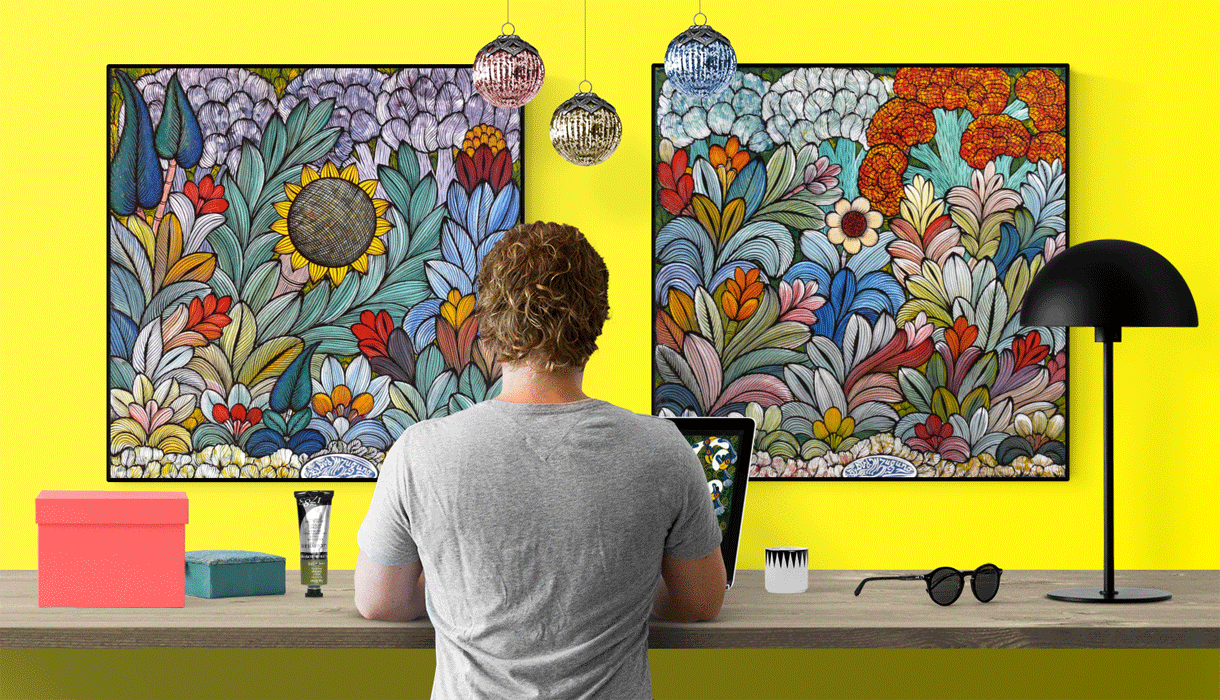
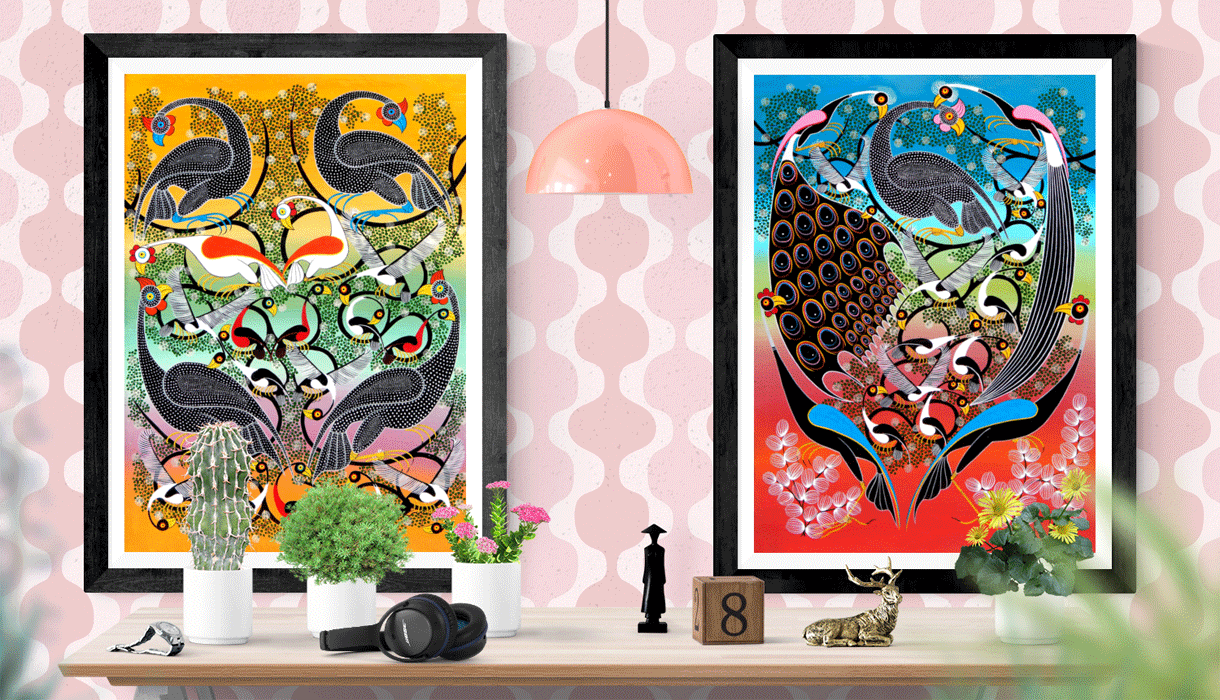
Go out to the nearest home decor shop and compare the prices of the posters with prices of the original Tinga Tinga paintings. The prices are unfortunate for the artists but good luck for you. Mitole is a famous artist and his paintings are in British Museum. And it is same for Mr.Charinda. His paintings are displayed at the National Gallery in Firenze. Now you can have them too on your walls!
START A COLLECTION!
Tinga Tinga paintings are fantastic items to collect. Start a Tinga Tinga collection now and you will meet many other people who do the same. Build up your collection. All themes are available within Tinga Tinga art.
SALE
DELIVERY
After you will let us know which paintings you desire to buy, we will ask you to provide us your delivery address by filling THE ADDRESS FORM. We use two different companies to send the paintings. We send cheap paintings with Czech post company. You will not be able to track the parcel. The expensive paintings are sent with EMS. EMS is a reliable international company which uses digital tracking of the parcels. The delivery takes around 5 days.
PAYMENT
Pay only after you receive the confirming email. You can pay with all major credit cards – VISA, MasterCard and American Express on the PAYMENT PAGE. The service is provided by PayPal. If you have a PayPal account, you can pay via PayPal. It is also possible to pay via bank transfer. In case you prefer this option, I will send you the bank details.
PRIVACY
Tinga Tinga Studio is committed to ensuring that your privacy is protected. You can be assured that the information you provide will only be used for delivering the paintings to you. I may send you rarely email to inform you about some important news. I will absolutely not sell, distribute or lease your personal information to third parties unless I get your permission.
RETURN POLICY
When you get the paintings and you are not satisfied for any reason, you can return them. But please, do it within 7 days of delivery. You will pay the postage and I will return you the money. You don´t need to have any reason.
PHOTOS
The photographs of the paintings are nothing else than photographs and the colours may vary slightly. But the red remains red and the blue remains blue. The colours vary also depending on your computer screen. But since you can return the painting for no reason within 7 days, this does not need to be an issue.
SHIPPING COST
The shipping cost is included in the price.
INSURANCE
If the parcel gets lost and you won't receive the paintings, I will refund you the money.
COME ACQUISTARE I DIPINTI
I due campi bianchi sopra sono il modulo di acquisto. Inserisci i codici dei quadri nel primo campo. Quindi scrivi la tua e-mail nel secondo campo e fai clic su "POST". Ti contatteremo Dove trovare i codici? Vedi sotto.
ESEMPIO: DOVE TROVATE IL CODICE (10819)
CONSEGNATO SU TELAIO
CONSEGNATO SU TELA
PREZIOSO
POST MORTEM
CERTIFICATO
INVIATO CON IL TRACCIAMENTO
NESSUN TRACCIAMENTO
L'ARTE
I DIPINTI
Tutti questi dipinti colorati provengono dall'Africa orientale. Appartengono a uno stile artistico che si chiama Tinga Tinga. Fu iniziato nel 1968 da Eduardo Saidi Tinga Tinga. Purtroppo è stato ucciso nel 1972, ma la sua eredità continua fino ad oggi. Se vuoi saperne di più sull'arte Tinga Tinga, visita www.afrum.com. Il sito web è solo in inglese.
GLI ARTISTI
Questo sito Web presenta dipinti di circa 100 migliori artisti. Vengono dalla Tanzania, che è conosciuta per la montagna africana più alta del Kilimangiaro e per l'isola piccante di Zanzibar. Leggi di più....
LE MOSTRE
I dipinti di Tinga Tinga sono presenti in numerosi musei e collezioni. Centinaia di mostre sono state organizzate in tutto il mondo .. I dipinti sono più popolari in Germania, Svizzera e soprattutto in Giappone. Ci sono circa 20 pittori in visita in Giappone ogni anno ..
LA BIBLIOGRAFIA
Sono stati scritti molti libri sull'arte Tinga Tinga. I dipinti sono anche molto popolari in libri da favola e film TV. E ovviamente, sono stati stampati anche innumerevoli cataloghi. Leggi di più...
INFORMAZIONI
L'ESHOP
L'eshop Tinga Tinga Studio è uno dei negozi più antichi al mondo che si occupano di arte africana. È qui da più di 10 anni e serve migliaia di acquirenti felici. Alcuni dei clienti erano attori famosi, politici e sportivi. I dipinti raggiunsero persino l'ex presidente degli Stati Uniti, la Germania e la famiglia reale giapponese.
IL FONDATORE
L'eshop è stato fondato da Daniel Augusta, che collabora con gli artisti in Tanzania dal 2005. È stato direttore della cooperativa di artisti Tinga Tinga dal 2010 al 2014. Tra il 2015 e il 2016 ha rianimato l'agenzia tanzaniana Tanart che ha spedito l'arte africana dappertutto il mondo. Ora è tornato in Europa, dove fornisce servizi artistici sotto Afrum.
IL GRUPPO
Attualmente, le vendite sono gestite da due esperti cechi di arte africana, Vaclav Dusek e Jiri Rosa, mentre Daniel Augusta è in tournée in Europa per presentare i dipinti in varie mostre. Prevediamo che presto il nostro team sarà affiancato da consulenti d'arte regionali Tinga Tinga.
MOSTRE
Tinga Tinga Studio ospita la più grande collezione di arte Tinga Tinga in Europa. Collaboriamo con gallerie, musei e altre istituzioni europee, sia private che pubbliche, per organizzare mostre di Tinga Tinga.
PERCHÉ ACQUISTARE TINGA TINGA
ESSERE UNICO
Tutti i dipinti di Tinga Tinga sono dipinti a mano. Oggi, tutto è prodotto in serie. Possedere un'arte originale è una bella esperienza. Porterà equilibrio nella tua vita.
ESSERE DIVERSO!
Non riesci a capire il prossimo regalo per i tuoi familiari, figli, fidanzato, fidanzata o genitori? Quindi considera di acquistare un dipinto di Tinga Tinga! Non può mai essere sbagliato! La pittura non è solo una cosa normale. È anche un sentimento, un messaggio e molto altro.
INVESTIMENTO
I dipinti sono ancora gravemente sottovalutati. Pertanto, il prezzo dell'arte Tinga Tinga aumenterà piuttosto che diminuirà. Francamente parlando: dove puoi ottenere un'opera d'arte originale per poche centinaia di dollari? Proprio di recente, un dipinto di Tinga Tinga è stato messo all'asta per $ 51.000, quindi non hai assolutamente nulla da perdere.
IL BUSINESS O LA CARITÀ?
Conosco persone che spendono migliaia di dollari in beneficenza africane. Ma in realtà "regalare" non è la buona strategia. Le persone vogliono essere orgogliose e indipendenti. Se acquisti un dipinto dall'Africa, farai di più per i poveri piuttosto che regalare i tuoi soldi. Darai loro lo scopo. Darai loro un pasto e i soldi per le tasse dei bambini.
TERAPIA
I dipinti di Tinga Tinga sono carichi di energia. Molte persone mi hanno detto che si sentono felici quando vedono un dipinto di Tinga Tinga. E certo: esiste una scienza chiamata arte terapia. Tinga Tinga sta sicuramente aiutando la tua anima.
DECORA CASA!
Vai al negozio di arredamento per la casa più vicino e confronta i prezzi dei poster con i prezzi dei dipinti originali di Tinga Tinga. I prezzi sono sfortunati per gli artisti ma buoni per te. Mitole è un artista famoso e i suoi dipinti sono al British Museum. Ed è lo stesso per Mr.Charinda. I suoi dipinti sono esposti alla Galleria Nazionale di Firenze. Ora puoi averli anche sulle tue pareti!
INIZIA UNA COLLEZIONE!
I dipinti di Tinga Tinga sono oggetti fantastici da collezionare. Inizia subito una collezione di Tinga Tinga e incontrerai molte altre persone che fanno lo stesso. Costruisci la tua collezione. Tutti i temi sono disponibili nell'arte Tinga Tinga.
VENDITA
CONSEGNA
Dopo che ci comunicherai quali dipinti desideri acquistare, ti chiederemo di fornirci il tuo indirizzo di consegna compilando IL MODULO DI INDIRIZZO. Usiamo due diverse società per inviare i dipinti. Inviamo quadri economici con la compagnia postale ceca. Non sarai in grado di rintracciare il pacco. I dipinti costosi vengono inviati con EMS. EMS è una società internazionale affidabile che utilizza il monitoraggio digitale dei pacchi. La consegna richiede circa 5 giorni.
PAGAMENTO
Paga solo dopo aver ricevuto l'e-mail di conferma. Puoi pagare con tutte le principali carte di credito - VISA, MasterCard e American Express nella PAGINA DI PAGAMENTO. Il servizio è fornito da PayPal. Puoi anche pagare con PayPal
INVIAMI QUALUNQUE MESSAGGIO!
Puoi anche inviarmi un'e-mail a daniel@afrum.com
КАК КУПИТЬ КАРТИНЫ
Два белых поля выше - это форма покупки. Заполните коды картин на первом поле. Затем напишите свой адрес электронной почты во втором поле и нажмите «POST». Мы свяжемся с вами Где найти коды? Смотри ниже.
ПРИМЕР: ГДЕ ВЫ НАХОДИТЕ КОД (10819)
Доставлено на раму
ПОСТАВЛЯЕТСЯ НА ХОЛСТ
ЦЕННЫЕ
POST MORTEM
CERTIFIED
Отправлено с отслеживанием
Нет отслеживания
ИСКУССТВО
КАРТИНЫ
Все эти красочные картины из Восточной Африки. Они принадлежат к стилю искусства, который называется Tinga Tinga. Он был основан в 1968 году Эдуардо Саиди Тинга Тинга. К сожалению, он был убит в 1972 году, но его наследие продолжается до сегодняшнего дня. Если вы хотите узнать больше об искусстве Tinga Tinga, пожалуйста, посетите www.afrum.com. К сожалению, сайт только на английском языке.
ХУДОЖНИКИ
На этом сайте представлены картины около 100 лучших художников. Они родом из Танзании, известной самой высокой африканской горой Килиманджаро и острым островом Занзибар. Подробнее....
ВЫСТАВКИ
Картины Тинга Тинга находятся во многих музеях и коллекциях. Сотни выставок были организованы по всему миру. Картины наиболее популярны в Германии, Швейцарии и особенно в Японии. В Японии ежегодно посещают около 20 художников.
БИБЛИОГРАФИЯ
Много книг было написано об искусстве Тинга Тинга. Картины также очень популярны в сказочных книгах и телевизионных фильмах. И, конечно же, было напечатано множество каталогов. Подробнее....
ИНФОРМАЦИЯ
ЭШОП
Интернет-магазин Tinga Tinga Studio - один из старейших интернет-магазинов в мире, занимающийся африканским искусством. Это было здесь больше 10 лет, обслуживая тысячи счастливых покупателей. Некоторые из клиентов были известными актерами, политиками и спортсменами. Картины дошли даже до бывшего президента США, Германии и королевской японской семьи.
ОСНОВАТЕЛЬ
Интернет-магазин был основан Даниэлем Огастой, который работает с художниками в Танзании с 2005 года. Он был менеджером Художественного кооператива Tinga Tinga с 2010 по 2014 год. С 2015 по 2016 год он возродил танзанийское агентство Tanart, которое поставляло африканское искусство по всему миру. мир. Теперь он вернулся в Европу, где он предоставляет художественные услуги при Афруме.
КОМАНДА
В настоящее время продажи осуществляются двумя чешскими экспертами по африканскому искусству, Вацлавом Дусеком и Иржи Розой, а Даниэль Августа совершает поездку по Европе, чтобы представить картины на различных выставках. Мы ожидаем, что вскоре к нашей команде присоединятся региональные европейские арт-консультанты Tinga Tinga.
ВЫСТАВКИ
Tinga Tinga Studio является домом для самой большой коллекции произведений искусства Tinga Tinga в Европе. Мы сотрудничаем с галереями, музеями и другими европейскими учреждениями, как частными, так и государственными, для организации выставок Tinga Tinga.
ПОЧЕМУ КУПИТЬ ТИНГА ТИНГА
БЫТЬ УНИКАЛЬНЫЙ
Все картины Тинга Тинга написаны вручную. Сегодня все массово производится. Владение оригинальным искусством - это хороший опыт. Это приносит баланс в вашу жизнь.
БУДЬ ДРУГИМ!
Не можете ли вы найти следующий подарок для членов вашей семьи, детей, парня, девушки или родителей? Тогда подумайте о покупке картины Tinga Tinga! Это никогда не может быть неправильно! Живопись это не только обычная вещь. Это также чувство, сообщение и многое другое.
ИНВЕСТИЦИОННЫЙ
Картины до сих пор сильно недооценены. Поэтому цена на искусство Tinga Tinga скорее будет расти, чем снижаться. Честно говоря - где можно взять оригинальное произведение искусства за несколько сотен долларов? Совсем недавно картина Tinga Tinga была продана с аукциона за $ 51.000, так что вам нечего терять.
БИЗНЕС ИЛИ БЛАГОТВОРИТЕЛЬНОСТЬ?
Я знаю людей, которые тратят тысячи долларов на африканские благотворительные организации. Но на самом деле «раздавать» не очень хорошая стратегия. Люди хотят быть гордыми и независимыми. Если вы покупаете картину из Африки, вы сделаете больше для бедных людей, чем просто отдаете свои деньги. Вы дадите им цель. Вы дадите им еду и деньги для детей.
ТЕРАПИЯ
Картины Тинга Тинга наполнены энергией. Многие люди говорили мне, что чувствуют себя счастливыми, когда видят картину Тинга Тинга. И конечно - есть наука под названием арт-терапия. Тинга Тинга определенно помогает вашей душе.
Украсьте дом!
Выйдите в ближайший магазин домашнего декора и сравните цены на плакаты с ценами на оригинальные картины Тинга Тинга. Цены неудачные для художников, но хорошие для вас. Митоле - известный художник, а его картины находятся в Британском музее. И то же самое для мистера Чаринды. Его картины выставлены в Национальной галерее во Флоренции. Теперь вы можете иметь их на своих стенах!
НАЧАТЬ КОЛЛЕКЦИЮ!
Картины Тинга Тинга - фантастические предметы для коллекционирования. Начните коллекцию Tinga Tinga сейчас, и вы встретите много других людей, которые делают то же самое. Создайте свою коллекцию. Все темы доступны в Tinga Tinga art.
ПРОДАЖА
ДОСТАВКА
После того, как вы сообщите нам, какие картины вы хотите приобрести, мы попросим вас указать адрес доставки, заполнив АДРЕСНУЮ ФОРМУ. Мы используем две разные компании для отправки картин. Мы отправляем дешевые картины с чешской почтовой компанией. Вы не сможете отслеживать посылку. Дорогие картины отправляются с EMS. EMS - это надежная международная компания, которая использует цифровое отслеживание посылок. Доставка занимает около 5 дней.
ОПЛАТА
Оплата только после получения подтверждающего электронного письма. Вы можете оплатить все основные кредитные карты - VISA, MasterCard и American Express на странице оплаты. Услуга предоставляется PayPal. Вы также можете оплатить с PayPal
Отправь мне любое сообщение!
Вы также можете отправить мне письмо на daniel@afrum.com
JAK KOUPIT OBRAZY
Dvě výše uvedená bílá pole jsou nákupní formulář. Vyplňte kódy obrazů v prvním poli. Poté napište svůj e-mail do druhého pole a klikněte na „POST“. Budeme vás kontaktovat. Kde najít kódy? Viz níže.
PŘÍKLAD: KDE NAJDETE KÓD (10819)
OBRAZ JE NA RÁMU
OBRAZ JE NA PLÁTNĚ
DOBRÁ INVESTICE
POST MORTEM
CERTIFIKOVANÝ
POŠTA S TRACKINGEM
POŠTA BEZ TRACKINGU
UMĚNÍ
OBRAZY
Všechny tyto barevné obrazy pocházejí z východní Afriky. Patří k uměleckému stylu, který se jmenuje Tinga Tinga. Začalo to v roce 1968 Eduardo Saidi Tinga Tinga. Bohužel byl zabit v roce 1972, ale jeho odkaz pokračuje dodnes. Pokud se chcete dozvědět více o umění Tinga Tinga, navštivte prosím www.afrum.com. Web je pouze v angličtině.
UMĚLCI
Tento web vám představí obrazy od asi 100 nejlepších umělců. Pocházejí z Tanzanie, která je známá nejvyšší africkou horou Kilimanjaro a kořenitým ostrovem Zanzibar. Přečtěte si více....
VÝSTAVY
Obrazy Tinga Tinga jsou v mnoha muzeích a sbírkách. Po celém světě byly uspořádány stovky výstav. Obrazy jsou nejoblíbenější v Německu, Švýcarsku a zejména v Japonsku. Každý rok je v Japonsku asi 20 hostujících malířů.
BIBLIOGRAFIE
O umění Tinga Tinga bylo napsáno mnoho knih. Obrazy jsou také velmi populární v pohádkových knihách a televizních filmech. A samozřejmě bylo vytištěno také mnoho katalogů. Přečtěte si více....
INFO
ESHOP
Eshop Tinga Tinga Studio je jedním z nejstarších eshopů na světě zabývajících se africkým uměním. Je zde již více než 10 let a slouží tisícům šťastných kupujících. Někteří ze zákazníků byli slavní herci, politici a sportovci. Obrazy zasáhly i bývalého prezidenta USA, Německa a královské japonské rodiny.
ZAKLADATEL
Eshop založil Daniel Augusta, který pracuje s umělci v Tanzanii od roku 2005. Od roku 2010 do roku 2014 byl ředitelem uměleckého družstva Tinga Tinga. V letech 2015 až 2016 oživil tanzanskou agenturu Tanart, která dodávala africké umění po celém světě svět. Nyní se přestěhoval zpět do Evropy, kde poskytuje umělecké služby v rámci Afrum.
TÝM
V současné době se na prodejích podílejí dva čeští odborníci na africké umění, Václav Dušek a Jiří Rosa, zatímco Daniel Augusta cestuje po Evropě a prezentuje obrazy na různých výstavách. Očekáváme, že k našemu týmu se brzy připojí regionální evropští poradci umění Tinga Tinga.
VÝSTAVY
Tinga Tinga Studio je domovem největší sbírky umění Tinga Tinga v Evropě. Při pořádání výstav Tinga Tinga spolupracujeme s galeriemi, muzei a dalšími evropskými institucemi, soukromými i veřejnými.
PROČ KOUPIT TINGA TINGA
BUĎ JEDINEČNÝ
Všechny obrazy Tinga Tinga jsou ručně malované. Dnes je vše hromadně vyráběno. Vlastnit originální umění je dobrá zkušenost. Přinese vám rovnováhu ve vašem životě.
BUĎ ODLIŠNÝ!
Nemůžete přijít na další dárek pro své rodinné příslušníky, děti, přítele, přítelkyni nebo rodiče? Pak zvažte nákup obrazu Tinga Tinga! Nikdy to nemůže být špatně! Malování není jen obyčejná věc. Je to také pocit, poselství a mnohem více.
INVESTICE
Obrazy jsou stále hrubě podceňovány. Cena umění Tinga Tinga tedy spíše poroste než klesne. Upřímně řečeno - kde můžete získat originální umělecké dílo za několik set dolarů? Nedávno byl obraz Tinga Tinga vydražen za 51 000 $, takže nemáte co ztratit.
OBCHOD NEBO CHARITA?
Znám lidi, kteří utratí tisíce dolarů za africké charity. Ale ve skutečnosti „rozdávání“ není dobrá strategie. Lidé chtějí být hrdí a nezávislí. Pokud si koupíte obraz z Afriky, pro chudé lidi uděláte víc, než jen rozdáte své peníze. Dáte jim účel. Dáte jim jídlo a peníze na dětské poplatky.
TERAPIE
Obrazy Tinga Tinga jsou nabity energií. Mnoho lidí mi řeklo, že se cítí šťastní, když vidí obraz Tinga Tinga. A jistě - existuje věda zvaná arteterapie. Tinga Tinga rozhodně pomáhá vaší duši.
DEKORACE DOMŮ!
Jděte do nejbližšího obchodu s dekoracemi domů a porovnejte ceny plakátů s cenami původních obrazů Tinga Tinga. Ceny jsou pro umělce nešťastné, ale pro vás dobré. Mitole je slavný umělec a jeho obrazy jsou v Britském muzeu. A totéž platí pro pana Charindy. Jeho obrazy jsou vystaveny v Národní galerii ve Firenze. Nyní je můžete mít také na svých zdech!
ZAČNĚTE KOLEKCI!
Obrazy Tinga Tinga jsou fantastické předměty ke sběru. Začněte sbírku Tinga Tinga a setkáte se s mnoha dalšími lidmi, kteří dělají totéž. Vytvořte si svou sbírku. Všechna témata jsou k dispozici v umění Tinga Tinga.
PRODEJ
DODÁVKA
Poté, co nám dáte vědět, které obrazy chcete koupit, požádáme vás, abyste nám poskytli svou dodací adresu vyplněním ADRESOVÉHO FORMULÁŘE. K zasílání obrazů používáme dvě různé společnosti. Posíláme levné obrazy s českou poštovní společností. Nebudete moci sledovat zásilku. Drahé obrazy jsou zasílány s EMS. EMS je spolehlivá mezinárodní společnost, která využívá digitální sledování zásilek. Dodávka trvá přibližně 5 dní.
ZPŮSOB PLATBY
Zaplaťte až poté, co obdržíte potvrzovací e-mail. Můžete platit všemi hlavními kreditními kartami - VISA, MasterCard a American Express na stránce PLATBA. Službu poskytuje PayPal. Můžete také platit pomocí PayPal.
NAPIŠTE NÁM JAKOUKOLIV ZPRÁVU!
Nebo napište email na daniel@afrum.com
COMO COMPRAR LAS PINTURAS
Los dos campos blancos anteriores son el formulario de compra. Complete los códigos de las pinturas en el primer campo. Luego escriba su correo electrónico en el segundo campo y haga clic en "POST". Nos pondremos en contacto con usted ¿Dónde encontrar los códigos? Ver abajo.
EJEMPLO: DÓNDE ENCUENTRAS EL CÓDIGO (10819)
DENTREGADO EN MARCO
ENTREGADO EN LONA
VALIOSO
POST MORTEM
CERTIFICADO
ENVIADO CON SEGUIMIENTO
SIN SEGUIMIENTO
EL ARTE
LAS PINTURAS
Todas estas pinturas coloridas son del este de África. Pertenecen a un estilo de arte que se llama Tinga Tinga. Fue iniciado en 1968 por Eduardo Saidi Tinga Tinga. Desafortunadamente fue asesinado en 1972, pero su legado continúa hasta hoy. Si desea saber más sobre el arte de Tinga Tinga, visite www.afrum.com. El sitio web solo está en inglés.
LOS ARTISTAS, LAS ARTISTAS
Este sitio web presenta pinturas de unos 100 mejores artistas. Vienen de Tanzania, que es conocida por la montaña africana más alta Kilimanjaro y la isla picante Zanzíbar. Lee mas....
LAS EXPOSICIONES
Las pinturas de Tinga Tinga se encuentran en muchos museos y colecciones. Cientos de exposiciones se organizaron en todo el mundo. Las pinturas son más populares en Alemania, Suiza y especialmente en Japón. Hay alrededor de 20 pintores visitantes en Japón cada año.
LA BIBLIOGRAFÍA
Muchos libros fueron escritos sobre el arte Tinga Tinga. Las pinturas también son muy populares en libros de cuentos y películas de televisión. Y, por supuesto, también se imprimieron innumerables catálogos. Lee mas....
INFORMACIÓN
LA TIENDA
La tienda de Tinga Tinga Studio es una de las tiendas más antiguas del mundo que se ocupa del arte africano. Ha estado aquí por más de 10 años, atendiendo a miles de compradores satisfechos. Algunos de los clientes eran actores famosos, políticos y deportistas. Las pinturas llegaron incluso al ex presidente de Estados Unidos, Alemania y la familia real japonesa.
EL FUNDADOR
El eshop fue fundado por Daniel Augusta, quien ha estado trabajando con los artistas en Tanzania desde 2005. Fue el gerente de la Cooperativa de Artistas Tinga Tinga de 2010 a 2014. Entre 2015 y 2016 revivió la agencia tanzana Tanart, que envió arte africano a todo el mundo. el mundo. Ahora regresó a Europa, donde ofrece servicios de arte bajo Afrum.
EL EQUIPO
Actualmente, las ventas son manejadas por dos expertos checos en arte africano, Vaclav Dusek y Jiri Rosa, mientras que Daniel Augusta recorre Europa para presentar las pinturas en varias exposiciones. Esperamos que pronto se unan a nuestro equipo consultores de arte regionales europeos de Tinga Tinga.
EXPOSICIONES
Tinga Tinga Studio es el hogar de la mayor colección de arte Tinga Tinga en Europa. Cooperamos con galerías, museos y otras instituciones europeas, tanto privadas como públicas, para organizar exposiciones Tinga Tinga.
POR QUÉ COMPRAR TINGA TINGA
¡SÉ ÚNICO!
Todas las pinturas de Tinga Tinga están pintadas a mano. Hoy, todo se produce en masa. Poseer un arte original es una buena experiencia. Esto traerá equilibrio a tu vida.
¡SÉ DIFERENTE!
¿No puedes imaginar el próximo regalo para los miembros de tu familia, hijos, novio, novia o padres? ¡Entonces considere comprar una pintura Tinga Tinga! ¡Nunca puede estar equivocado! La pintura no es solo una cosa ordinaria. También es un sentimiento, mensaje y mucho más.
INVERSIÓN
Las pinturas todavía están muy subestimadas. Por lo tanto, el precio del arte Tinga Tinga aumentará en lugar de disminuir. Hablando francamente, ¿dónde puede obtener una obra de arte original por unos pocos cientos de dólares? Recientemente, se subastó una pintura de Tinga Tinga por $ 51,000, por lo que no tiene absolutamente nada que perder.
¿EL NEGOCIO O LA CARIDAD?
Conozco personas que gastan miles de dólares en organizaciones benéficas africanas. Pero, de hecho, "regalar" no es la buena estrategia. La gente quiere ser orgullosa e independiente. Si compra una pintura de África, hará más por los pobres que simplemente regalar su dinero. Les darás el propósito. Les darás una comida y el dinero para las tarifas de los niños.
TERAPIA
Las pinturas de Tinga Tinga están cargadas de energía. Muchas personas me dijeron que se sienten felices cuando ven una pintura de Tinga Tinga. Y claro, hay una ciencia llamada terapia del arte. Tinga Tinga definitivamente está ayudando a tu alma.
DECORAR CASA!
Ve a la tienda de decoración para el hogar más cercana y compara los precios de los carteles con los precios de las pinturas originales de Tinga Tinga. Los precios son desafortunados para los artistas pero buenos para ti. Mitole es un artista famoso y sus pinturas están en el Museo Británico. Y es lo mismo para Mr.Charinda. Sus pinturas se exhiben en la Galería Nacional de Florencia. ¡Ahora también puedes tenerlos en tus paredes!
¡COMIENCE UNA COLECCIÓN!
Las pinturas de Tinga Tinga son artículos fantásticos para coleccionar. Comience una colección de Tinga Tinga ahora y conocerá a muchas otras personas que hacen lo mismo. Construye tu colección. Todos los temas están disponibles en Tinga Tinga art.
REBAJA
ENTREGA
Después de que nos haga saber qué cuadros desea comprar, le pediremos que nos proporcione su dirección de entrega completando EL FORMULARIO DE DIRECCIÓN. Utilizamos dos compañías diferentes para enviar las pinturas. Enviamos cuadros baratos con la empresa de correos checa. No podrá rastrear el paquete. Las pinturas caras se envían con EMS. EMS es una empresa internacional confiable que utiliza el seguimiento digital de las parcelas. La entrega demora alrededor de 5 días.
PAGO
Pague solo después de recibir el correo electrónico de confirmación. Puede pagar con todas las principales tarjetas de crédito: VISA, MasterCard y American Express en la PÁGINA DE PAGO. El servicio es proporcionado por PayPal. También puedes pagar con PayPal
ENVIARME CUALQUIER MENSAJE!
También puedes enviarme un correo electrónico a daniel@afrum.com
JAK KUPIĆ OBRAZY
Dwa białe pola powyżej to formularz zakupu. Wpisz kody obrazów w pierwszym polu. Następnie wpisz swój adres e-mail w drugim polu i kliknij „POST”. Skontaktujemy się z Tobą. Gdzie znaleźć kody? Patrz poniżej.
PRZYKŁAD: GDZIE ZNALEŹĆ KOD (10819)
DOSTARCZONE NA RAMIE
DOSTARCZONE NA PŁÓTNIE
WARTOŚCIOWY
POST MORTEM
ATESTOWANY
WYSŁANE Z ŚLEDZENIEM
BEZ ŚLEDZENIA
SZTUKA
OBRAZY
Wszystkie te kolorowe obrazy pochodzą ze wschodniej Afryki. Należą do stylu sztuki, który nazywa się Tinga Tinga. Zostało założone w 1968 roku przez Eduardo Saidi Tinga Tinga. Niestety został zabity w 1972 roku, ale jego spuścizna trwa do dziś. Jeśli chcesz dowiedzieć się więcej o sztuce Tinga Tinga, odwiedź www.afrum.com. Strona jest tylko w języku angielskim.
ARTYŚCI
Ta strona prezentuje obrazy około 100 najlepszych artystów. Pochodzą z Tanzanii, która znana jest z najwyższej afrykańskiej góry Kilimanjaro i pikantnej wyspy Zanzibar. Czytaj więcej....
WYSTAWY
Obrazy Tinga Tinga znajdują się w wielu muzeach i kolekcjach. Na całym świecie zorganizowano setki wystaw. Obrazy są najbardziej popularne w Niemczech, Szwajcarii, a zwłaszcza w Japonii.
Każdego roku w Japonii odwiedza się około 20 malarzy.
BIBLIOGRAFIA
Wiele książek zostało napisanych o sztuce Tinga Tinga. Obrazy są również bardzo popularne w książkach i filmach telewizyjnych. I oczywiście wydrukowano także niezliczoną liczbę katalogów. Czytaj więcej....
INFO
ESHOP
Sklep Tinga Tinga Studio jest jednym z najstarszych sklepów na świecie zajmujących się sztuką afrykańską. Jest tu od ponad 10 lat, służąc tysiącom szczęśliwych nabywców. Niektórzy klienci byli znanymi aktorami, politykami i sportowcami. Obrazy dotarły nawet do byłego prezydenta USA, Niemiec i japońskiej rodziny królewskiej.
ZAŁOŻYCIEL
Sklep został założony przez Daniela Augustę, który współpracuje z artystami w Tanzanii od 2005 roku. Był kierownikiem Tinga Tinga Artist Cooperative od 2010 do 2014 roku. W latach 2015-2016 ożywił tanzańską agencję Tanart, która sprzedawała afrykańską sztukę świat. Teraz wrócił do Europy, gdzie świadczy usługi artystyczne pod kierunkiem Afrum.
DRUŻYNA
Obecnie sprzedażą zajmują się dwaj czescy eksperci od sztuki afrykańskiej, Vaclav Dusek i Jiri Rosa, podczas gdy Daniel Augusta podróżuje po Europie, prezentując obrazy na różnych wystawach. Oczekujemy, że wkrótce do naszego zespołu dołączą regionalni europejscy konsultanci artystyczni Tinga Tinga.
WYSTAWY
Tinga Tinga Studio jest domem dla największej kolekcji sztuki Tinga Tinga w Europie. Współpracujemy z galeriami, muzeami i innymi instytucjami europejskimi, zarówno prywatnymi, jak i publicznymi, aby organizować wystawy Tinga Tinga.
DLACZEGO KUPIĆ TINGA TINGA
BYĆ WYJĄTKOWYM
Wszystkie obrazy Tinga Tinga są ręcznie malowane. Dziś wszystko jest produkowane masowo. Posiadanie oryginalnej sztuki to dobre doświadczenie. Zapewni równowagę w twoim życiu.
BYĆ INNYM!
Nie możesz znaleźć następnego prezentu dla członków rodziny, dzieci, chłopaka, dziewczyny lub rodziców? Zastanów się nad zakupem obrazu Tinga Tinga! Nigdy nie może być źle! Malowanie to nie tylko zwykła rzecz. To także uczucie, przesłanie i wiele więcej.
INWESTYCJA
Obrazy są nadal rażąco niedoceniane. Dlatego cena sztuki Tinga Tinga raczej wzrośnie niż spadnie. Szczerze mówiąc - gdzie można zdobyć oryginalne dzieło sztuki za kilkaset dolarów? Niedawno obraz Tinga Tinga został sprzedany na aukcji za 51 000 $, więc nie masz absolutnie nic do stracenia.
BIZNES CZY CHARYTATYWNOŚĆ?
Znam ludzi, którzy wydają tysiące dolarów na afrykańskie organizacje charytatywne. Ale w rzeczywistości „rozdawanie” nie jest dobrą strategią. Ludzie chcą być dumni i niezależni. Jeśli kupisz obraz z Afryki, zrobisz więcej dla biednych ludzi niż tylko rozdając swoje pieniądze. Dasz im cel. Dasz im posiłek i pieniądze na opłaty dla dzieci.
TERAPIA
Obrazy Tinga Tinga są naładowane energią. Wiele osób powiedziało mi, że czują się szczęśliwi, gdy widzą obraz Tinga Tinga. I jasne - istnieje nauka zwana terapią sztuką. Tinga Tinga zdecydowanie pomaga twojej duszy.
DEKORUJ DOM!
Idź do najbliższego sklepu z dekoracjami do domu i porównaj ceny plakatów z cenami oryginalnych obrazów Tinga Tinga. Ceny są niefortunne dla artystów, ale dobre dla ciebie. Mitole jest znanym artystą, a jego obrazy znajdują się w British Museum. Tak samo jest z panem Charindą. Jego obrazy są wyświetlane w National Gallery we Firenze. Teraz możesz mieć je również na swoich ścianach!
ROZPOCZNIJ KOLEKCJĘ!
Obrazy Tinga Tinga to fantastyczne przedmioty do zebrania. Rozpocznij kolekcję Tinga Tinga już teraz, a poznasz wiele innych osób, które robią to samo. Zbuduj swoją kolekcję. Wszystkie motywy są dostępne w ramach sztuki Tinga Tinga.
SPRZEDAŻ
DOSTAWA
Po poinformowaniu nas, które obrazy chcesz kupić, poprosimy Cię o podanie adresu dostawy, wypełniając FORMULARZ ADRESOWY. Do wysyłania obrazów używamy dwóch różnych firm. Wysyłamy tanie obrazy z czeską firmą pocztową. Nie będziesz w stanie śledzić przesyłki. Drogie obrazy są wysyłane za pomocą EMS. EMS jest wiarygodną międzynarodową firmą, która wykorzystuje cyfrowe śledzenie paczek. Dostawa trwa około 5 dni.
ZAPŁATA
Zapłać dopiero po otrzymaniu wiadomości e-mail z potwierdzeniem. Możesz zapłacić wszystkimi głównymi kartami kredytowymi - VISA, MasterCard i American Express na STRONIE PŁATNOŚCI. Usługa jest świadczona przez PayPal. Możesz również zapłacić za pomocą PayPal.
WYŚLIJ MNIE DOWOLNĄ WIADOMOŚĆ!
Możesz również wysłać mi wiadomość e-mail na adres daniel@afrum.com
Tinga Tinga Studio
© 2005 - 2020


Tinga Tinga Studio
Na Roudne 422, Pilsen
Czech Republic
